
The 5-franc coin
The 5-franc coin is a very special coin not only in Switzerland but also further afield. A distinctive feature is its design, which has remained more or less unchanged for nearly 100 years. But the value of the 5-franc coin itself is also unique. Most coin sets lack coins with a similarly high value or comparable purchasing power. And few coins earn affectionate nicknames like this one does: “Fünfliber”, “schnegg”, “cent sous”, or “une tune”.
The first 5-franc coins used for transactions in western Switzerland were the French 5-franc coins, which came into circulation in Switzerland in 1795. In Bernese currency, they were worth around 35 batzen or 5 pounds (livres), which is where the German term “Fünfliber” commonly used today originates. The foundations for the Swiss franc were laid with the establishment of the federal state in 1848 and the adoption of the Act on Federal Coinage in 1850.
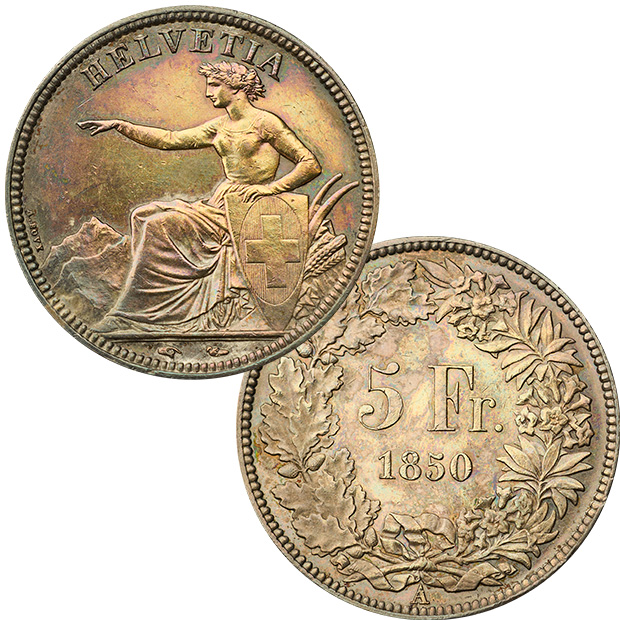
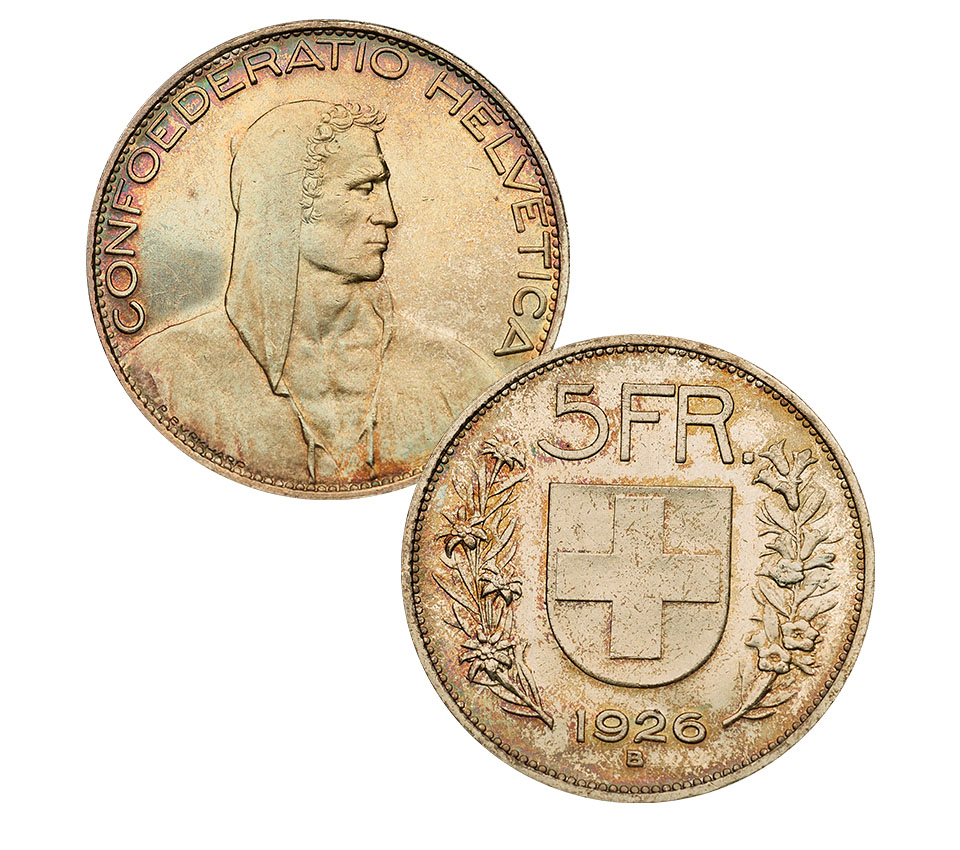
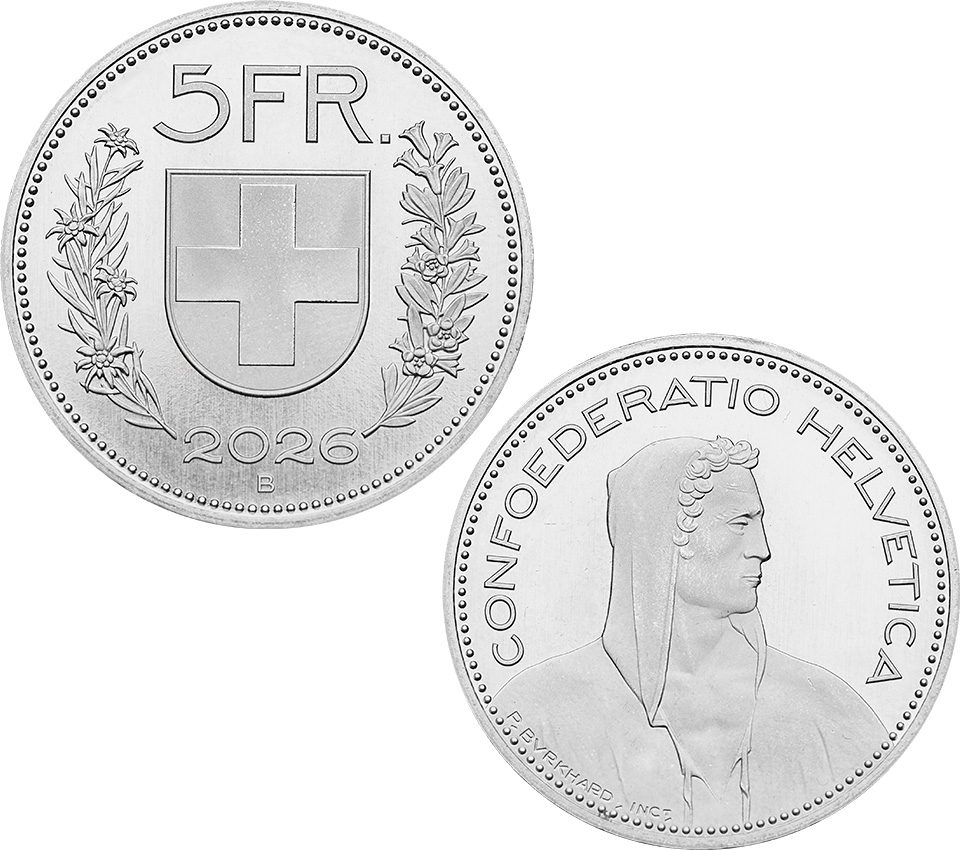
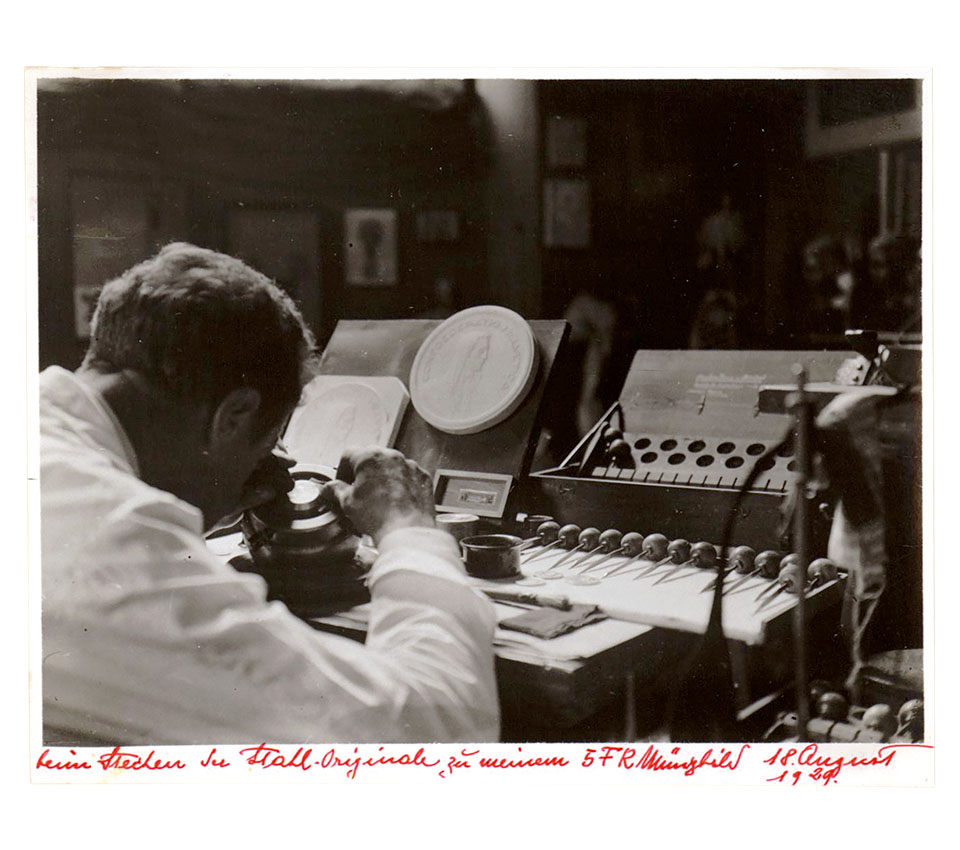
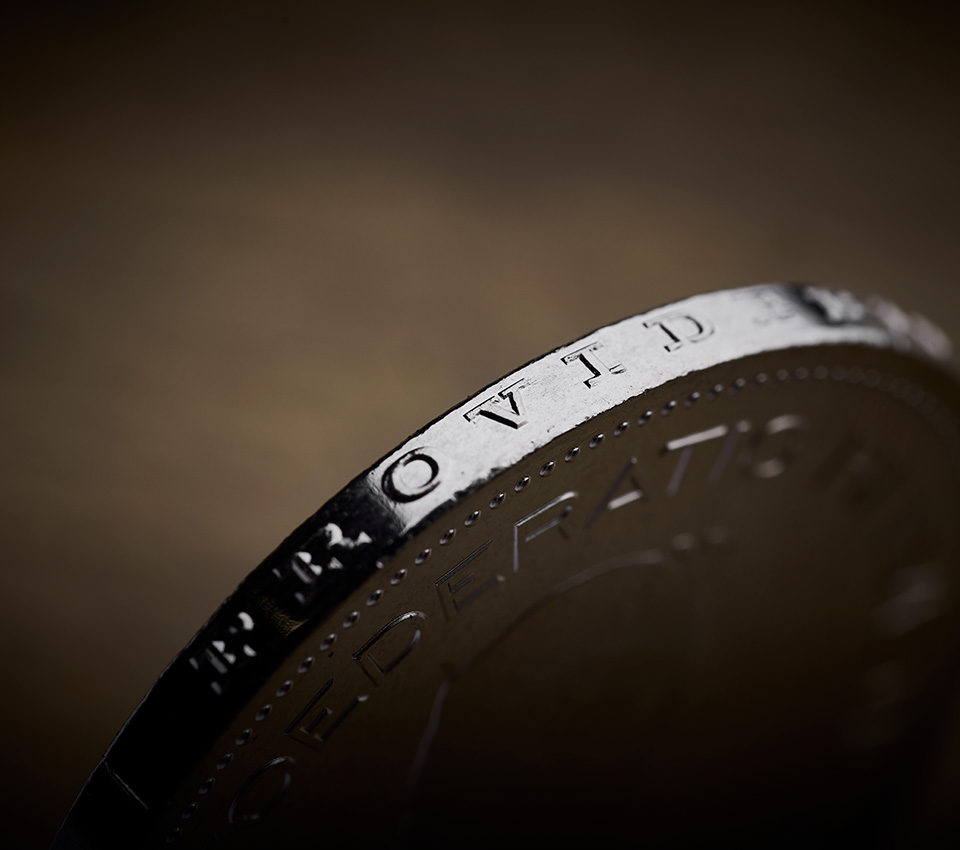
Description of the coin designs
Obverse: Front view of a beardless male bust in a hooded shepherd’s shirt, face turned to the right. At the top, the inscription CONFOEDERATIO HELVETICA in a semicircle. At the bottom left, in small letters, the artist’s name P. BURKHARD INCT. A circle of pearls.
Reverse: Within a rounded shield, the Swiss cross, flanked by a branch of edelweiss (left) and a branch of alpine rose (right); above the shield, 5 FR. Below, the year. A circle of pearls
Edge inscription: *** / DOMINUS PROVIDEBIT / **********